Short answer
To rest without your phone, you do not need to ban it forever or prove exceptional willpower. Put it out of reach and out of sight for a defined block, allow only the people who may genuinely need you, and decide in advance what you will do instead. A shower, a walk, dinner without a screen, a book, music, a conversation, or ten quiet minutes all count as rest when the next notification is not setting the pace.
The aim is not a perfect screen-time score. It is one repeatable part of the day in which your attention is not available to every alert, headline, and feed refresh.
Why does my phone make downtime feel less restful?
A phone is very good at changing your state immediately. If you are bored, there is a feed. If you are tense, there are headlines. If there is an awkward pause, there are messages. If you are depleted, there are short videos. None of this makes you weak; it is the basic convenience of carrying an endless stream of novelty in your pocket.
The trouble is that most feeds do not provide a natural stopping point. You can be done with work and still not have entered rest: you are simply moving from one demand for attention to another. The feeling afterward is familiar—time passed, but your body and mind did not quite get the memo.
Research supports taking interruptions seriously without turning the phone into a villain. In one experiment, receiving a phone notification disrupted performance on an attention-demanding task even when people did not interact with the device. (pubmed.ncbi.nlm.nih.gov) A meta-analysis also found a small but statistically significant negative effect of smartphone presence or use on cognitive performance. That is not evidence that a phone damages your brain; it is a practical reason to create distance when you want a real pause. (pubmed.ncbi.nlm.nih.gov)
Think of phone-free rest as reducing invitations to switch tasks. You make fewer decisions, get fewer prompts to check, and give another activity enough room to become satisfying.
How can I rest without missing something important?
Do not start by asking, “Am I allowed to use my phone?” Ask, “What would actually be urgent?” For many people, the answer is a very short list: a partner, a child’s school, an aging parent, a medical situation, or a work role with genuine on-call responsibility. Most alerts do not belong in that category.
Make a three-level urgency list
| Level | Examples | What happens during your rest block |
|---|---|---|
| Urgent | Calls from close family, childcare, health or safety matters | Allow calls, and consider allowing repeat callers |
| Important, but not immediate | A delivery update, a routine work question, messages from friends | Check at a planned time, such as in an hour |
| Can wait | Social feeds, news alerts, shopping, games, promotional email, most group chats | Silence and leave unopened until the block ends |
Your list will not look like anyone else’s. If you are caring for someone, on call, or waiting for important news, the first category may be larger. The point is to make the decision while you are calm—not while an alert is already asking for your attention. For a fuller version of this approach, read Don’t turn it all off: give your phone three levels of urgency.
Set up one dedicated rest mode
On an iPhone, go to Settings → Focus and create a Focus called “Evening,” “Rest,” or whatever feels clear. Allow notifications only from the people you chose, avoid adding entertainment apps, and either schedule it or turn it on from Control Center. Apple’s current Focus settings can be scheduled by time, location, or app, and can use a separate Home Screen to remove tempting app icons. (support.apple.com)
On Android 14 or later, go to Settings → Modes → Do Not Disturb, or create a custom mode. Notification filters let you choose which people, apps, alarms, and repeat callers can get through; Bedtime mode can also run on a schedule. In Digital Wellbeing → Focus mode, selected apps are paused and cannot send notifications while the mode is active. Exact labels vary by phone maker. (support.google.com)
Do not spend an hour optimizing settings. Try the first version for two or three evenings. Then ask one useful question: “What interrupted me for a good reason?” Add only that exception. Every unnecessary exception turns your rest mode back into ordinary phone time.
What is a realistic after-work phone-free routine?
The hardest part is often the first five minutes after you close your laptop or walk through the door. If nothing is planned, the phone supplies the next action. Instead, use this 45-minute transition.
- Close the work loop in two minutes. Write down the first thing you will do tomorrow and when you will next check work messages. This makes “I should just look once” less persuasive. If work is spilling into every evening, How to Set Boundaries When Working Remotely can help you create a firmer end point.
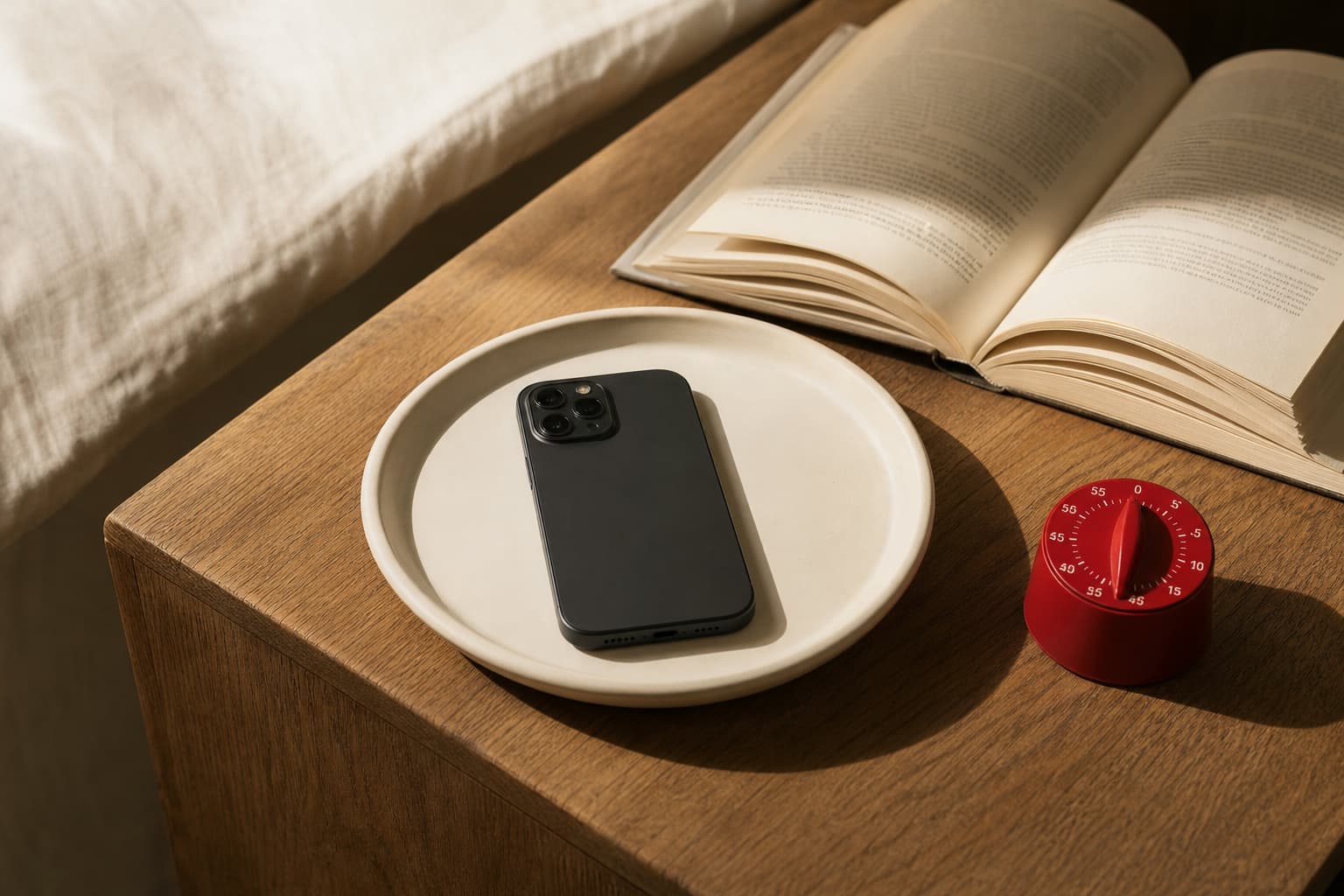
- Turn on your rest mode. Do not leave the phone face down beside you. Put it on charge in the hallway, in a drawer, or in another room. A silent phone on the coffee table is still an open invitation.
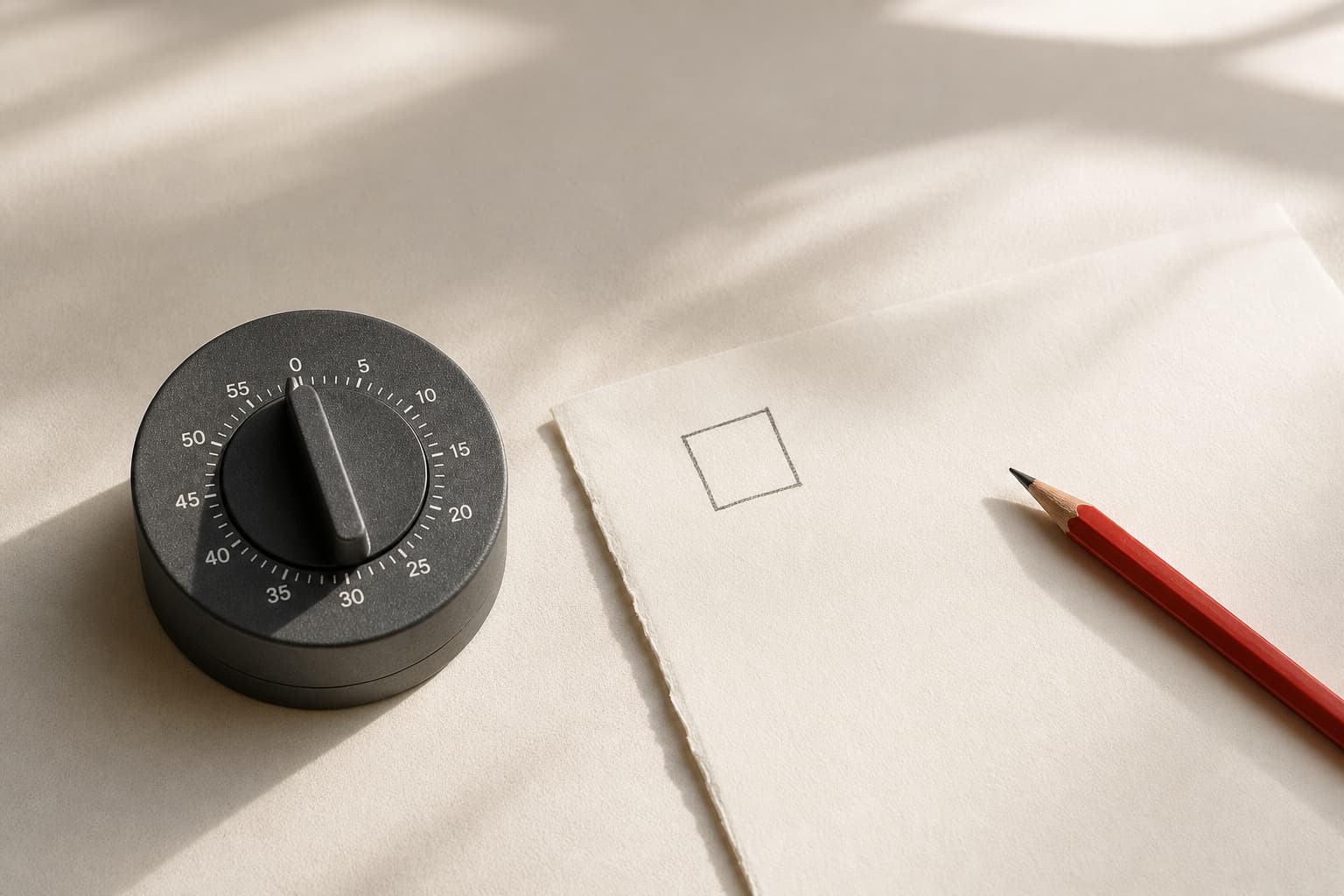
- Use a visible end point. Set a kitchen timer, look at a wall clock, or choose the start of a program you intend to watch. Begin with 25 to 45 minutes, not a dramatic promise to avoid your phone all night.
- Choose an activity with almost no startup cost. Not “become the kind of person who reads novels,” but “read five pages.” Not “exercise,” but “walk around the block.” Put the book on the chair, shoes by the door, or ingredients on the counter before the break starts.
- Return to the phone on purpose. When the time is up, decide what you mean to check: messages from family, your calendar, or one specific thread. Open that item, not the home screen. Then put the device away again or move on with the evening.
A planned check is not failure. For many people, it is what makes a phone-free interval sustainable. The alternative is often a strict rule followed by an exhausted hour of scrolling.
What can I do instead of scrolling when I have no energy?
“Find a hobby” is not useful advice at 8:30 p.m. after a difficult day. You need options that match your energy, not activities that look virtuous from the outside.
| If you feel… | Try this without your phone | Why it is easy to begin |
|---|---|---|
| Completely spent | Take a shower, make tea by a window, lie down with your eyes closed for ten minutes | No choice-making, replying, or achievement required |
| Stiff from sitting | Walk slowly, stretch, clear one small surface | Changes your posture and setting without a major plan |
| Mentally crowded | Read paper pages, do a puzzle, cook a familiar meal | One stream of attention instead of an endless new one |
| Lonely | Call one person, meet someone, write a note by hand | Creates contact rather than a feed-shaped substitute for it |
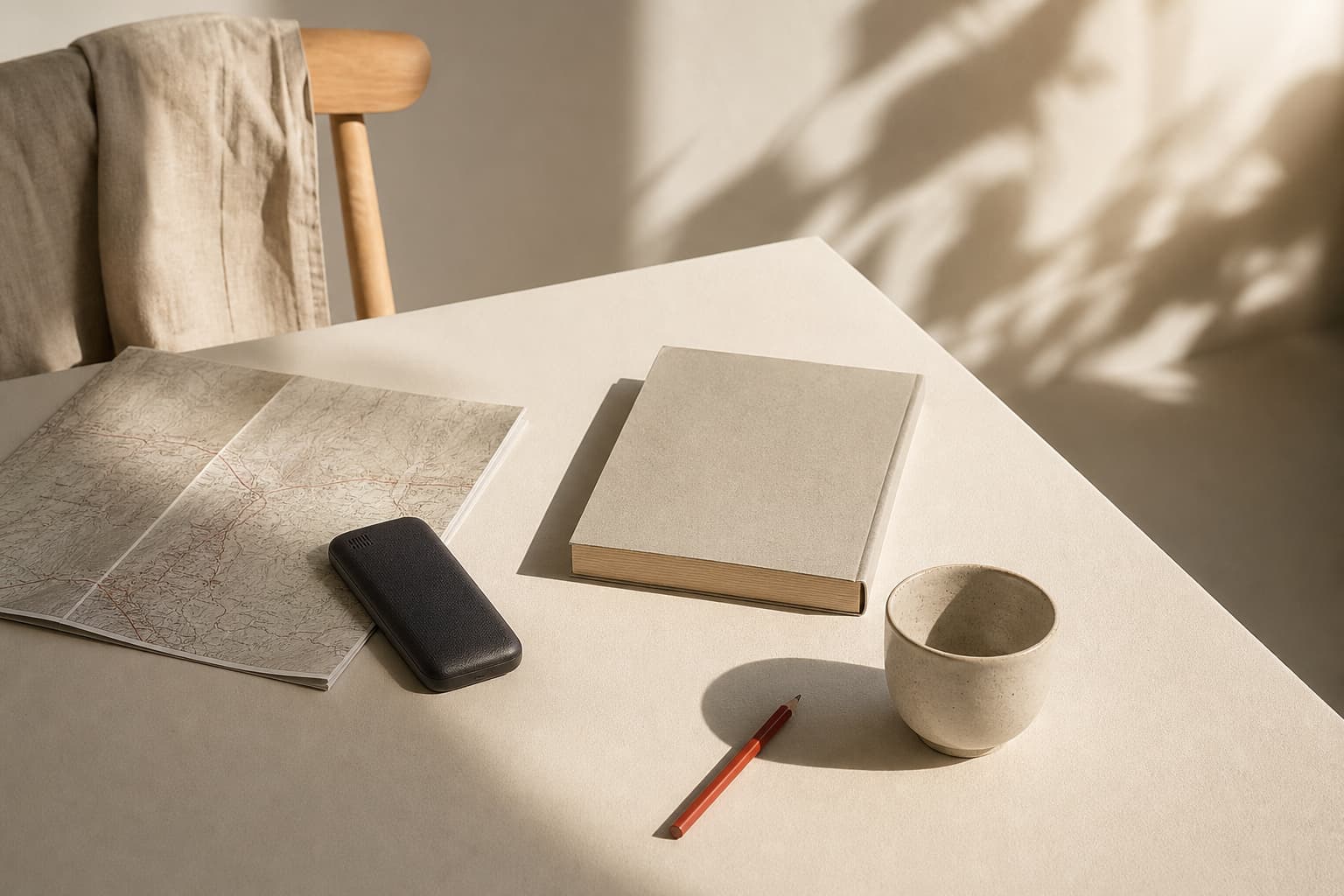
| Restless and craving novelty | Take a new route, visit a library, use a pre-downloaded audio guide | The novelty has a place and an ending |
Your phone can still support rest. Music, an audiobook, a map for a walk, or a call with a friend may be exactly right. The useful distinction is whether you chose the activity beforehand and whether it has an endpoint. If your main issue is reflexively opening bad-news feeds, read How to Stop Doomscrolling Without Missing What Matters.
Try this no-purchase experiment tonight
Try the “dinner plus 30 minutes” experiment once. You do not need an app, a lockbox, or a new device.
- Ten minutes before dinner, turn on Do Not Disturb or your rest mode.
- Put your phone on charge outside the kitchen or living room. Keep calls from your urgent-contact list available.
- Write one after-dinner action on paper: “walk around the block,” “take a shower,” “read ten pages,” or “lie on the floor and listen to one album.”
- Do not judge whether you are resting correctly. Just do not pick up the phone until the thirty minutes are over.
- At the end, write down two observations: how many times you wanted to reach for it, and what you did instead.
This is not a character test. It is a small piece of field research on your own evening. If reaching for the phone was constant, make the alternative easier or move the phone farther away. If you barely noticed it, repeat the same setup for three nights before changing anything.
Does the evidence support cutting back rather than going cold turkey?
The most useful research message is more modest than the usual “dopamine detox” rhetoric. In a preregistered randomized trial, participants blocked mobile internet on their smartphones for two weeks while retaining calls and text messages. The study found improvements in subjective well-being and sustained attention, but maintaining the block was difficult: only part of the sample met the researchers’ definition of full compliance. (pmc.ncbi.nlm.nih.gov) That makes a case for designing a workable environment, not for demanding heroic abstinence.
A state-of-the-art review in Pediatrics likewise concluded that reducing social media or smartphone use may be more helpful for well-being than total abstinence, while emphasizing that the studies differ substantially in their participants, interventions, and measures. (publications.aap.org) One phone-free evening is not a treatment for anxiety, insomnia, depression, or burnout. It is a behavioral tool that can make room for sleep, movement, conversation, quiet, and activities that actually restore you.
You also do not need to make every leisure hour productive. A little boredom can be the transition between constant input and noticing what you want next. If you would rather build a longer but still realistic reset, see A realistic weekend digital detox plan that works.
When this doesn’t apply
Do not put your phone far away if you are on call, responsible for a child, awaiting health-related news, navigating an unfamiliar area, or relying on the device for safety. Use allowed contacts, calls, and brief planned check-ins instead of complete disconnection.
If you are dealing with persistent anxiety, low mood, insomnia, or a sense that you cannot control your behavior, do not reduce the problem to screen time. A phone can reinforce avoidance, but it may not be the cause. A clinician or qualified mental-health professional may be a better next step than another harsh detox challenge.
The practical measure of success is simple: after the break, do you have a little more room in yourself and a little less guilt? Keep the least strict setup that you can repeat tomorrow.
Sources
- Blocking mobile internet on smartphones improves sustained attention, mental health, and subjective well-beingPNAS Nexus
- The attentional cost of receiving a cell phone notificationJournal of Experimental Psychology: Human Perception and Performance / PubMed
- Does the Brain Drain Effect Really Exist? A Meta-AnalysisPerspectives on Psychological Science / PubMed
- Digital Detox and Well-BeingPediatrics, American Academy of Pediatrics
- Set up a Focus on iPhoneApple Support
- Limit interruptions with Modes & Do Not Disturb on AndroidAndroid Help
- Manage how you spend time on your Android phone with Digital WellbeingAndroid Help
Short answers
Can I rest without my phone if I might miss an important call?
Yes. Allow calls from the few people who may truly need you, consider repeat callers, and set a planned time to check messages. You do not have to choose between being unreachable and being constantly available.
Where should I put my phone while I rest?
Another room is best; a hallway charger, drawer, or bag all create a useful pause before checking it. Face down is better than face up, but it does not create the same physical friction.
What if I am bored without my phone?
Choose a ten-minute replacement with almost no setup: a shower, tea, a short walk, music, five pages of a book, or one phone call. Boredom usually needs a small next action, not an ambitious new identity.
Do I need a full weekend digital detox?
No. Short, regular periods without feeds and nonessential notifications are often more realistic than an occasional strict detox. Start with one meal, one walk, or the first 30 minutes after work.