Short answer
To stop buying groceries you already have, you do not need a barcode scanner or a perfect pantry spreadsheet. Give recurring foods a visible home, add items to a running list when you open the last one, and check the fridge, freezer, and cupboard before you finalize the list. In a shared household, add one more rule: whoever buys something marks it bought right away.
This is not a discipline challenge, and it does not require an empty kitchen. It is a way to stop asking memory to do a job that closed doors, crowded shelves, sales, and a rushed trip home make genuinely difficult.
Why do I keep buying groceries I already have?
Usually, it is not carelessness. A kitchen is a poor information system by default: the rice is behind the canned beans, frozen vegetables are buried under leftovers, and an almost-empty sauce bottle makes you forget the unopened backup in the cupboard. At the store, you make a decision without seeing any of that context.
Research on household food waste points in a sensible direction: meal and purchase planning, shopping lists, and better stock organization are associated with less waste. That does not mean one tidy shelf will produce a guaranteed saving. Homes, budgets, kitchens, and eating patterns differ. The useful takeaway is smaller: when food is easier to see, you have fewer reasons to guess.
Date labels create another kind of uncertainty. FDA and USDA have noted that differing date phrases can confuse shoppers and contribute to prematurely discarding wholesome food. A “Best if Used By” date is generally about quality, not an automatic safety deadline. But organization is not food-safety expertise: do not use this article to override storage guidance, package instructions, visible spoilage, or local public-health advice.
Then there is the reassuring logic of the backup: “We might need it,” “It is on sale,” or “I do not want to run out.” A backup can be useful. It becomes clutter when it has no assigned space, no quantity limit, and no realistic path to being used.
How should I organize groceries to prevent duplicates?
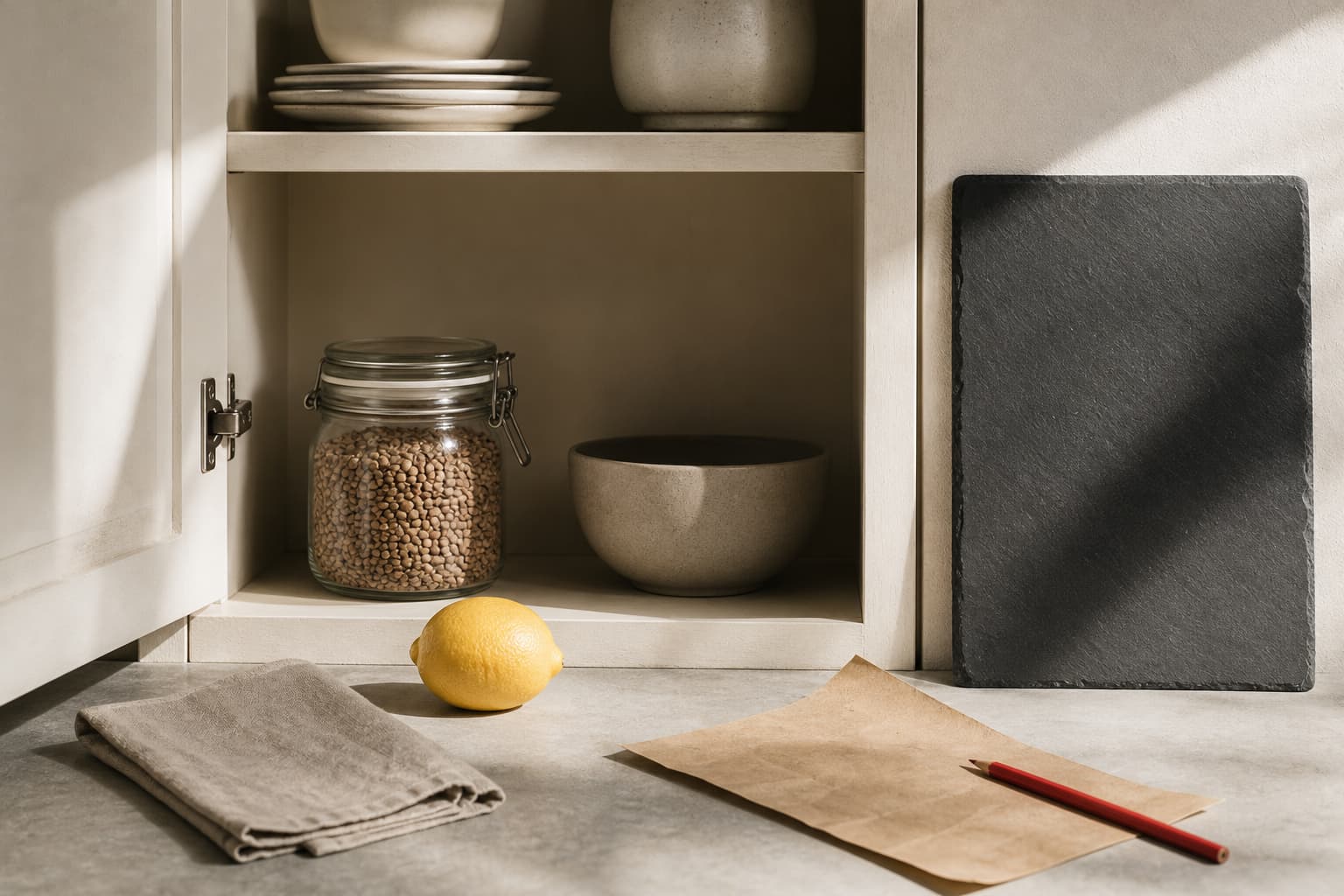
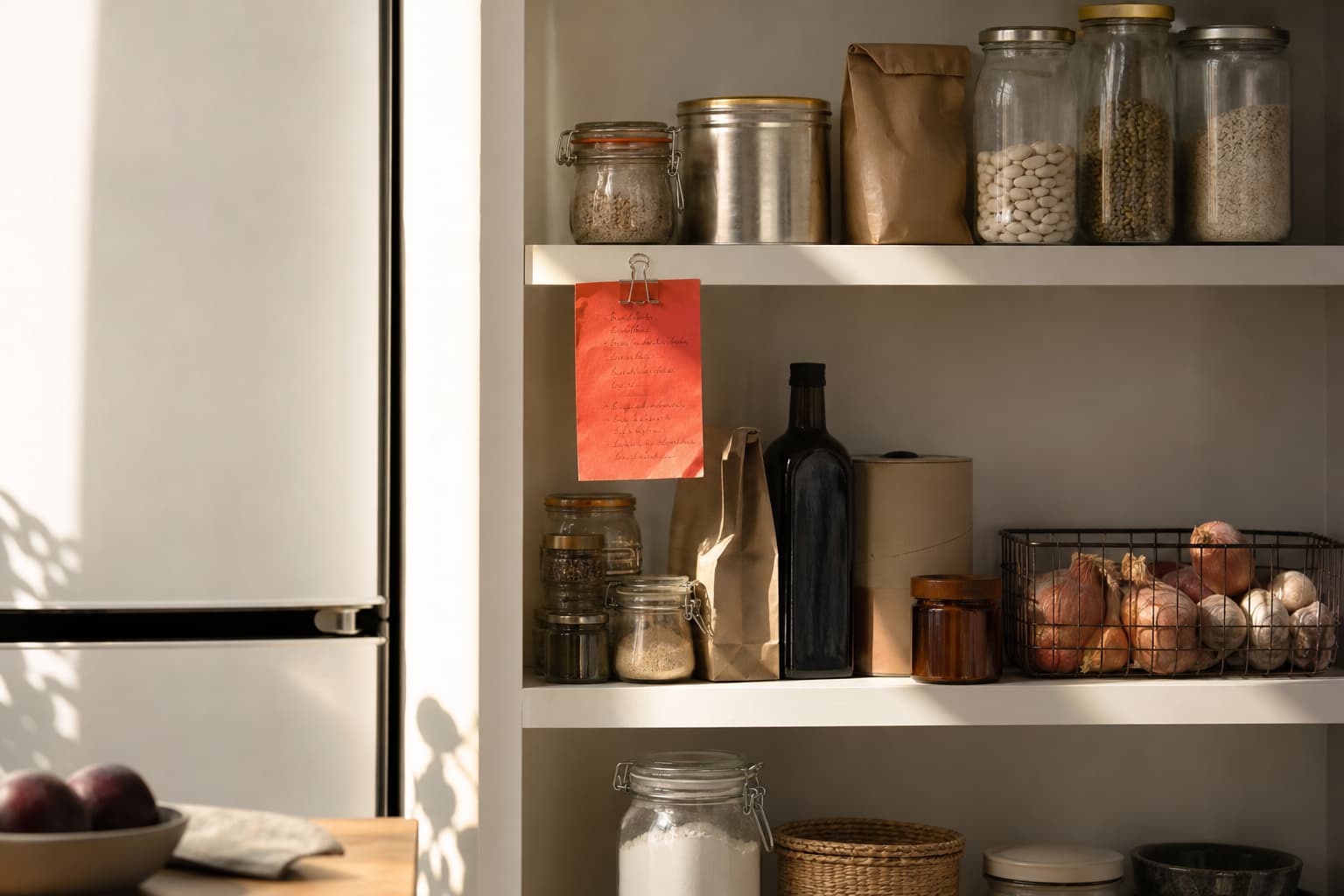
Start with addresses, not containers. Every repeat category needs one dependable home. It does not need to look polished; it just needs to stay put.
| Zone | What belongs there | The rule |
|---|---|---|
| Use-first zone | Open packages, leftovers, foods to use sooner | Keep it at eye level or in the front row |
| Main stock | Pasta, grains, canned food, tea | One category, one location |
| Backup stock | Unopened extras and sale purchases | Set a modest limit in advance |
| Freezer | Portions, vegetables, bread, prepared food | Label opaque containers with contents and date |
1. Put like with like
Do not begin with a whole-kitchen reset. Choose one category that repeatedly catches you out: sauces, grains, snack food, spices, canned goods, or frozen vegetables. Pull the matching items together. You may immediately find three open bags, or discover that you did not need another one after all.
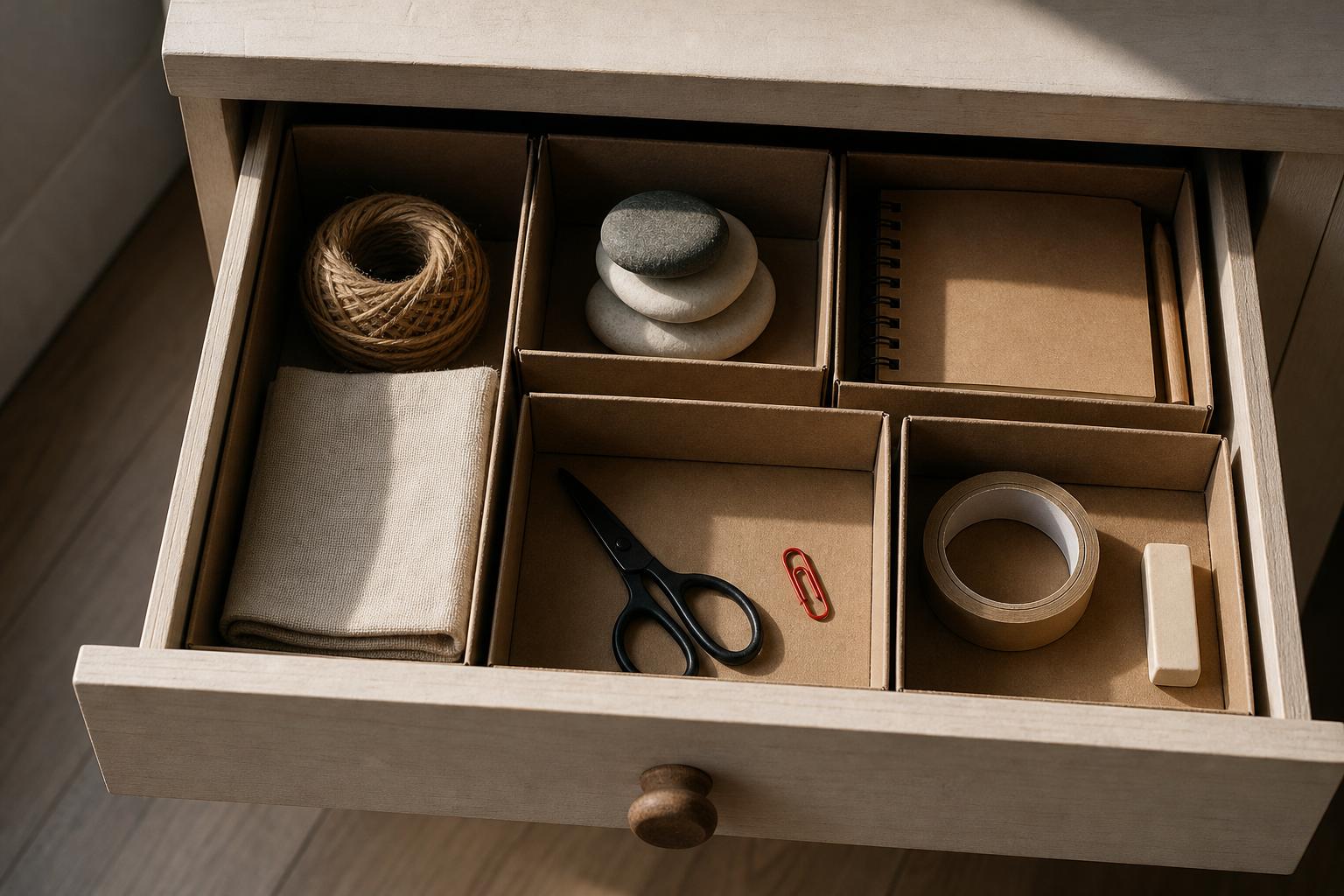
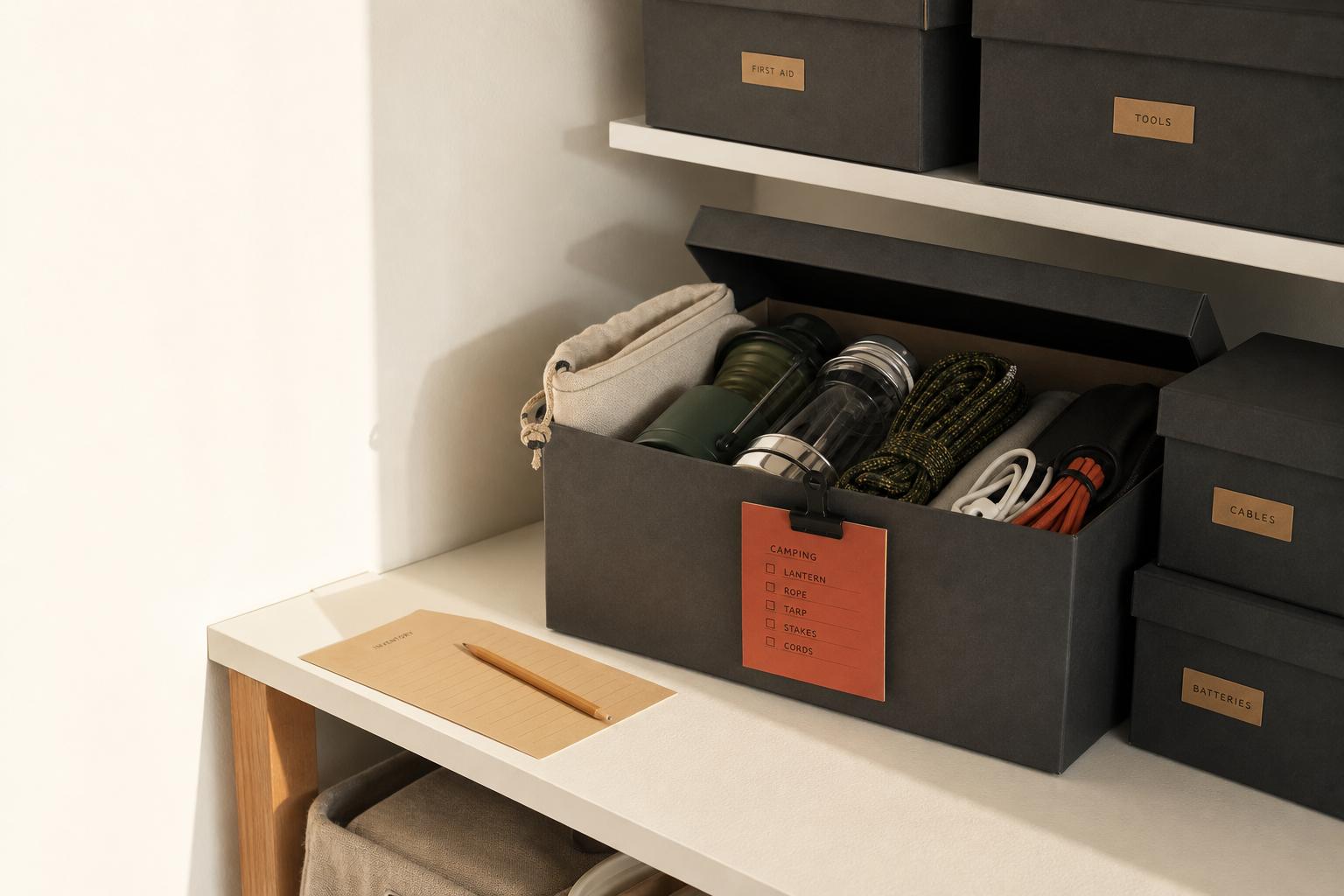
If storage is tight, it matters even more not to scatter a category across several cupboards just because there is a gap. Scattering creates false scarcity. A spare cardboard box, tray, or sheet of paper marking a category can work as well as a set of new organizers. The point is retrieval, not décor.
2. Make a small “use first” zone
The highest-value area is not a beautifully decanted pantry. It is a conspicuous place for food that is already open or worth using soon. Put the half bag of salad, opened broth, yogurt, leftovers, or partly used grains there. In a fridge it might be one shelf; in a cupboard, one front basket.
This is not a rule that says you must force every ingredient into dinner. It is simply a prompt that gives you options before the thought “there is nothing here” takes over. If the next question is what to cook from those options, see How to Meal Plan With What You Already Have at Home.
3. Separate opened food from backup food
Two packages of oats are not inherently a problem. Not knowing which one is open and which one is your reserve is what creates repeat buying and forgotten food. Keep opened items in front, and keep unopened backups behind them or in a clearly designated reserve spot.
When you bring home a replacement, place it behind the older package. This simple first-in, first-out habit does not need an app. For refrigerated and frozen food, do not improvise storage times from memory; use official storage charts when you are unsure.
How do I make a grocery list that matches what I need?
A grocery list should not be a recital of what you usually buy. It should be a record of an actual gap. The best time to add an item is when you open the last one, or when you can tell the remainder will not last until the next shop.
Use the “last one” rule
You open the last coffee bag, take the last freezer portion of peas, or start the final roll of paper towels: put it on the list then. Do not wait for shopping day. The list becomes a replenishment record instead of a collection of anxious guesses made in an aisle.
For some people that list is paper on the fridge. For others, it is a shared note. Choose the least exciting tool everyone already uses: a note, a whiteboard, or a pinned message. A new app is not a solution if it creates another maintenance task.
Check only the uncertain items
Counting every can before every trip is likely to fail because it is too much work. Instead, put a question mark beside doubtful items: “flour?”, “tomato paste?”, “freezer bags?” Before leaving, check those few things in the cupboard, fridge, and freezer.
This works especially well for foods that do not visibly run out: spices, cooking oil, condiments, broth, canned tomatoes, and frozen portions. They are easy to buy because they feel absent, rather than because they are absent.
Take photos instead of keeping an inventory
Recent Reddit conversations have repeatedly suggested a low-friction workaround: take quick pictures of the fridge and pantry before leaving. That is anecdotal experience, not evidence that photos work for everyone. Still, it is a useful experiment because a photo gives you context without requiring you to update a database after every meal.
Try two or three pictures: one of the fridge, one of the freezer, and one of the main cupboard shelf. Keep them in favourites or beside your grocery note. At the store, look at them only when you are tempted to add something that was not on your plan.
How can a couple or family avoid duplicate groceries?
Shared homes do not defeat grocery systems because someone is irresponsible. Information simply moves more slowly than purchases: one person adds milk in the morning, another buys it after work, and a third person sees the unchanged list that evening.
Agree on three small rules
- Use one shared list. Not two private lists plus verbal requests.
- Mark an item bought immediately. Not after unpacking, but at checkout, in the car, or at the door.
- Log the emergency purchase too. If you pick up bread on the way home, remove or mark bread before it reaches the counter.
You do not need to appoint a pantry manager. It can help, though, to assign predictable categories: one person tends to household supplies, another buys fresh food for dinners. That reduces overlap without turning grocery shopping into supervision.
If food organization becomes a proxy argument about whose habits are better, do not add more rules. Try one shared list for two weeks and review only whether it reduced duplicate buying. For a gentler approach to home agreements, read Minimalism with Family: Declutter Without a Fight.
Is buying groceries in bulk actually a good deal?
A sale does not make a backup a mistake. It changes the question from “Is this cheap?” to “Can we use this without later buying the same thing again?”
Before buying a large pack, ask:
- How many open and unopened units do I already have?
- Where exactly will this new package live?
- How often do we really use it?
- Will I see it when I plan meals or write the next list?
If two answers are unclear, choose the normal size. Unit price is not the whole cost of a purchase. Space, attention, and the chance of forgetting an item have value too. This is the same useful pause behind How to Stop Spending Money on Things You Don’t Need: a pause does not ban the purchase; it makes it deliberate.
A no-buy experiment: one week of a visible kitchen
Try this for seven days without buying containers, subscriptions, or an inventory app.
- Pick one shelf in the fridge and one shelf in a cupboard as your use-first zones.
- Put opened packages and food you want to use sooner there.
- Put a paper list nearby, or create one shared note called “running low.”
- Add an item only when you open the last one.
- Before your next shop, take three photos: fridge, freezer, cupboard.
- Mark purchases as bought, then put new food behind older food.
- At the end of the week, ask: what did I expect to buy from memory but decide not to buy after checking?
Do not judge the experiment by an immaculate fridge or a dramatically smaller bill. The useful measure is whether the question “What do we already have?” became easier to answer. If it did, retain only the steps that took almost no effort.
When this doesn't apply
Do not build a detailed tracking system if it creates more stress than it saves. With an unpredictable schedule, a tiny fridge, medically necessary food reserves, frequent guests, or separate household budgets, a lighter system may be better: one visible use-first zone and a short list of essentials.
Also, do not turn “use what you have” into a reason to eat food you are unsure about. Visibility helps you find food; it does not replace safe storage, manufacturer instructions, or official food-safety guidance.
FAQ
Do I need a full pantry inventory to stop buying duplicates?
No. Start with the categories you buy twice most often: freezer food, sauces, canned goods, grains, and spices. A complete inventory makes sense mainly for a large pantry or separate freezer.
What is the easiest way to avoid duplicate groceries when I live alone?
Take quick photos of your fridge, freezer, and main cupboard shelf before shopping. For many people, that is easier than updating a list after every meal.
Is a paper list or a phone list better?
The best list is the one you can update when something runs low. Paper may be simplest for one person; a shared digital note is often easier when multiple people shop.
Can I still stock up when something is on sale?
Yes, if you know your current supply, have a place for the extra item, and will use it before quality declines. A low price alone is not a reason to add a backup.
What should I do with groceries I have already bought in duplicates?
Gather matching items together, put opened and older ones at the front, and plan one or two meals around them. Do not rush to use food that seems unsafe or has been stored improperly.
Sources
- Consumers: food loss and waste resourcesU.S. Department of Agriculture
- Cold Food Storage ChartFoodSafety.gov
- USDA-FDA seek information about food date labelingU.S. Food and Drug Administration
- Factors affecting food waste: a bibliometric review on household behaviorsNational Library of Medicine / PMC
- How to Stop Buying Duplicate GroceriesPublic Storage
- Frugal discussion: quick photos of pantry and fridge before shoppingReddit
Short answers
Do I need a full pantry inventory to stop buying duplicates?
No. Track the categories you repeatedly buy twice, plus the contents of a large freezer if you have one.
What is the easiest way to avoid duplicate groceries when I live alone?
Take quick photos of the fridge, freezer, and main cupboard shelf before shopping. It can be easier than maintaining a live inventory.
Can I still buy groceries in bulk when they are on sale?
Yes, if you know what you already own, have room for the purchase, and will use it before quality declines.
What should I do with duplicate groceries I already have?
Gather like items together, place opened and older food at the front, and make a couple of meals around those ingredients first.